
Board & Governance
MDOI is guided by an independent Board of Governance composed of leaders in research, technology, and scholarly communication. Their oversight ensures our mission remains open, transparent, and community-driven.
Apply to the BoardBoard Members
Our board members bring decades of combined expertise across academia, open science infrastructure, and digital publishing.
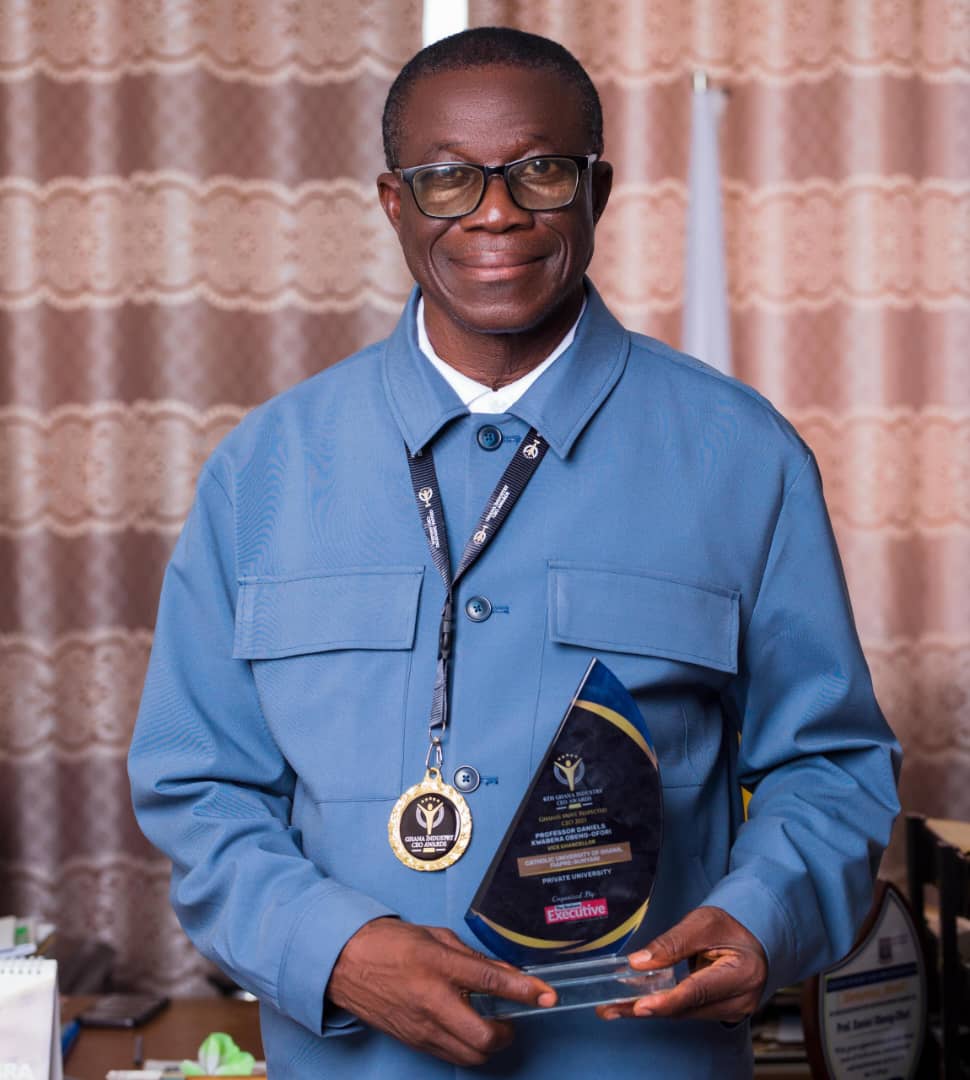
Professor Daniel Obeng-Ofori is a distinguished Ghanaian scientist, higher education leader, researcher, and internationally recognized expert in Agricultural Entomology, Postharvest Technology, Food Security, and Sustainable Agricultural Development. He currently serves as the President of the Catholic University of Ghana and Adjunct Professor at the University of Energy and Natural Resources (UENR), Ghana. With over four decades of experience in academia, research, university governance, and international development, he has established himself as one of Africa’s leading scholars in agricultural sciences and higher education management. Professor Obeng-Ofori holds a PhD in Agricultural Entomology and an M.Phil. in Applied Biology from the University of Cambridge, United Kingdom. His academic career has spanned several prestigious institutions, including the University of Ghana, the International Centre of Insect Physiology and Ecology (ICIPE), Kenya, the University of Energy and Natural Resources, and the Catholic University of Ghana. Throughout his distinguished career, he has occupied numerous leadership positions, including Pro Vice-Chancellor of UENR, Acting Dean of multiple faculties, Head of Department, President of the Ghana Science Association, President of the African Association of Insect Scientists, and Coordinator of several regional and international postgraduate programmes. An accomplished researcher and scholar, Professor Obeng-Ofori has led and participated in numerous internationally funded research projects supported by organizations such as the World Bank, DAAD, FAO, UNIDO, ACP-EU, the Alexander von Humboldt Foundation, and several international universities and research institutes. His research focuses on integrated pest management, chemical ecology, postharvest technology, biological control, sustainable agriculture, food security, and agricultural innovation systems. His pioneering contributions have significantly advanced knowledge on pest management strategies, storage technologies, and sustainable crop production systems across Africa. Professor Obeng-Ofori has supervised and mentored hundreds of undergraduate, master's, and doctoral students while teaching a broad range of courses in crop protection, entomology, postharvest science, agricultural research methods, and scientific writing. His commitment to academic excellence and capacity development has contributed immensely to strengthening higher education and research ecosystems within Ghana and across the African continent. A prolific scholar, he has authored and co-authored hundreds of scientific publications, book chapters, conference papers, technical reports, and policy documents. His work has been published in highly respected international journals and has influenced agricultural policy, food security interventions, and research practices in numerous countries. His scientific achievements have earned him several prestigious recognitions, including the Humboldt Research Fellowship, the ICIPE Achievement Award, Meritorious Awards from the University of Ghana, and recognition among the world's leading scientists. Beyond academia, Professor Obeng-Ofori has served as a consultant and advisor to governments, international development agencies, research institutions, and private-sector organizations on issues relating to agriculture, food systems, quality assurance, institutional development, policy formulation, and higher education governance. His expertise has contributed to the development of national policies, strategic frameworks, and capacity-building initiatives in Ghana, Sierra Leone, and other African countries. As an academic leader, Professor Obeng-Ofori is widely respected for his visionary leadership, commitment to quality education, promotion of research excellence, and dedication to nurturing the next generation of scholars and professionals. His enduring contributions to science, education, agriculture, and institutional development continue to shape policy, practice, and innovation across Africa and beyond.
About
Professor Daniel Obeng-Ofori is a distinguished Ghanaian scientist, higher education leader, researcher, and internationally recognized expert in Agricultural Entomology, Postharvest Technology, Food Security, and Sustainable Agricultural Development. He currently serves as the President of the Catholic University of Ghana and Adjunct Professor at the University of Energy and Natural Resources (UENR), Ghana. With over four decades of experience in academia, research, university governance, and international development, he has established himself as one of Africa’s leading scholars in agricultural sciences and higher education management. Professor Obeng-Ofori holds a PhD in Agricultural Entomology and an M.Phil. in Applied Biology from the University of Cambridge, United Kingdom. His academic career has spanned several prestigious institutions, including the University of Ghana, the International Centre of Insect Physiology and Ecology (ICIPE), Kenya, the University of Energy and Natural Resources, and the Catholic University of Ghana. Throughout his distinguished career, he has occupied numerous leadership positions, including Pro Vice-Chancellor of UENR, Acting Dean of multiple faculties, Head of Department, President of the Ghana Science Association, President of the African Association of Insect Scientists, and Coordinator of several regional and international postgraduate programmes. An accomplished researcher and scholar, Professor Obeng-Ofori has led and participated in numerous internationally funded research projects supported by organizations such as the World Bank, DAAD, FAO, UNIDO, ACP-EU, the Alexander von Humboldt Foundation, and several international universities and research institutes. His research focuses on integrated pest management, chemical ecology, postharvest technology, biological control, sustainable agriculture, food security, and agricultural innovation systems. His pioneering contributions have significantly advanced knowledge on pest management strategies, storage technologies, and sustainable crop production systems across Africa. Professor Obeng-Ofori has supervised and mentored hundreds of undergraduate, master's, and doctoral students while teaching a broad range of courses in crop protection, entomology, postharvest science, agricultural research methods, and scientific writing. His commitment to academic excellence and capacity development has contributed immensely to strengthening higher education and research ecosystems within Ghana and across the African continent. A prolific scholar, he has authored and co-authored hundreds of scientific publications, book chapters, conference papers, technical reports, and policy documents. His work has been published in highly respected international journals and has influenced agricultural policy, food security interventions, and research practices in numerous countries. His scientific achievements have earned him several prestigious recognitions, including the Humboldt Research Fellowship, the ICIPE Achievement Award, Meritorious Awards from the University of Ghana, and recognition among the world's leading scientists. Beyond academia, Professor Obeng-Ofori has served as a consultant and advisor to governments, international development agencies, research institutions, and private-sector organizations on issues relating to agriculture, food systems, quality assurance, institutional development, policy formulation, and higher education governance. His expertise has contributed to the development of national policies, strategic frameworks, and capacity-building initiatives in Ghana, Sierra Leone, and other African countries. As an academic leader, Professor Obeng-Ofori is widely respected for his visionary leadership, commitment to quality education, promotion of research excellence, and dedication to nurturing the next generation of scholars and professionals. His enduring contributions to science, education, agriculture, and institutional development continue to shape policy, practice, and innovation across Africa and beyond.
I am a research associate in the Department of Empirical Teaching and School Research at the Institute of Educational Science. Before joining the university, I taught for several years at various types of secondary schools and also obtained the qualification to teach at primary schools.

About
I am a research associate in the Department of Empirical Teaching and School Research at the Institute of Educational Science. Before joining the university, I taught for several years at various types of secondary schools and also obtained the qualification to teach at primary schools.
I am an educational psychologist and professor of Educational Science. In my research, I investigate how students’ self-regulated learning can be effectively supported. I further seek to improve our understanding of successful teaching in order to create learning environments that support prospective teachers in the development of their teaching abilities. With these goals in mind, I regard a thorough analysis of the cognitive and motivational processes underlying learning and teaching, as well as the combination of different research methodologies (experiments, thinking-aloud studies, longitudinal studies) as fundamental for my research. My research is interdisciplinary, because I try to integrate ideas from Educational, Social and Cognitive Psychology as well as from the Philosophy of Science. Also, I appreciate collaboration with researchers from Mathematics, Science, History and Literature Education.
About
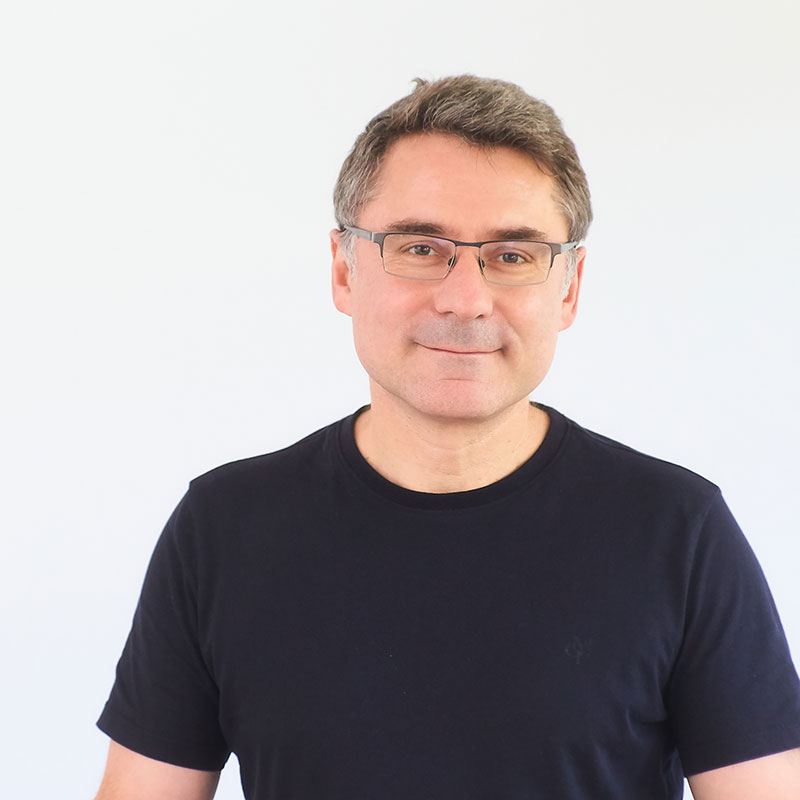
I am an educational psychologist and professor of Educational Science. In my research, I investigate how students’ self-regulated learning can be effectively supported. I further seek to improve our understanding of successful teaching in order to create learning environments that support prospective teachers in the development of their teaching abilities. With these goals in mind, I regard a thorough analysis of the cognitive and motivational processes underlying learning and teaching, as well as the combination of different research methodologies (experiments, thinking-aloud studies, longitudinal studies) as fundamental for my research. My research is interdisciplinary, because I try to integrate ideas from Educational, Social and Cognitive Psychology as well as from the Philosophy of Science. Also, I appreciate collaboration with researchers from Mathematics, Science, History and Literature Education.
Krisztina is responsible for organising events for The Oxford Research Centre in the Humanities (TORCH); she manages TORCH Research Hubs and provides administrative support for TORCH networks. She joined the University of Oxford in 2015 as a Communication and Events Assistant at the Faculty of Music, and completed a secondment as a Humanities Cultural Programme Events Officer at TORCH between 2019 and 2022. Krisztina has a background in event management in the arts and theatre sectors. She previously worked at the Trafó House of Contemporary Arts and the Hungarian National Theatre. More recently, Krisztina has worked as a concert manager for Music at Oxford, Oxford Bach Soloists Festival and has helped to run conferences, public engagement and alumni events at the Ashmolean Museum, the Pitt Rivers Museum, the Said Business School, the Mathematical Institute and the Sheldonian Theatre.

About
Krisztina is responsible for organising events for The Oxford Research Centre in the Humanities (TORCH); she manages TORCH Research Hubs and provides administrative support for TORCH networks. She joined the University of Oxford in 2015 as a Communication and Events Assistant at the Faculty of Music, and completed a secondment as a Humanities Cultural Programme Events Officer at TORCH between 2019 and 2022. Krisztina has a background in event management in the arts and theatre sectors. She previously worked at the Trafó House of Contemporary Arts and the Hungarian National Theatre. More recently, Krisztina has worked as a concert manager for Music at Oxford, Oxford Bach Soloists Festival and has helped to run conferences, public engagement and alumni events at the Ashmolean Museum, the Pitt Rivers Museum, the Said Business School, the Mathematical Institute and the Sheldonian Theatre.
I am working intensively on questions concerning the professionalisation of (prospective) teachers. In my research, I examine the educational actions of teachers from an educational science and educational psychology perspective, taking into account the challenges of a heterogeneous student body (in terms of performance, gender, migration, and social background). In doing so, I work with quantitative (including longitudinal analyses and multilevel models) and qualitative approaches (open-ended production tasks and interviews) and use both experimental paradigms (e.g., vignettes) and field studies with cross-sectional/longitudinal designs.

About
I am working intensively on questions concerning the professionalisation of (prospective) teachers. In my research, I examine the educational actions of teachers from an educational science and educational psychology perspective, taking into account the challenges of a heterogeneous student body (in terms of performance, gender, migration, and social background). In doing so, I work with quantitative (including longitudinal analyses and multilevel models) and qualitative approaches (open-ended production tasks and interviews) and use both experimental paradigms (e.g., vignettes) and field studies with cross-sectional/longitudinal designs.
Greg is responsible for managing the day-to-day core operations of the Faculty’s Finance Office including: purchasing of goods and services and expenses claims, trust funds and studentship payments etc. Responsible for all aspects of the management of the Faculty’s financial and research administration, including preparation of the annual budget and quarterly forecasts, and the overall responsibility for the full range of financial reporting carried out within the Faculty. This includes month-end and year-end processes, monitoring and payment of Craven awards, Faculty buyouts and the management of Faculty Trust Funds.
About
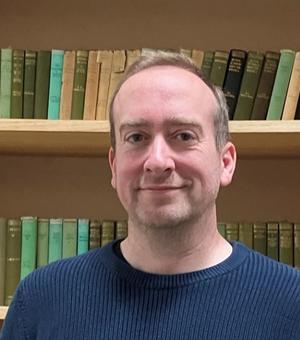
Greg is responsible for managing the day-to-day core operations of the Faculty’s Finance Office including: purchasing of goods and services and expenses claims, trust funds and studentship payments etc. Responsible for all aspects of the management of the Faculty’s financial and research administration, including preparation of the annual budget and quarterly forecasts, and the overall responsibility for the full range of financial reporting carried out within the Faculty. This includes month-end and year-end processes, monitoring and payment of Craven awards, Faculty buyouts and the management of Faculty Trust Funds.
Andrea Thomson supports faculty members with external research funding applications. Her role includes advising researchers at all career stages, helping improve the quality and number of funding applications, reviewing draft proposals, supporting project budgeting, assisting with institutional authorisation, and collaborating with colleagues to deliver research training and best-practice events.

About
Andrea Thomson supports faculty members with external research funding applications. Her role includes advising researchers at all career stages, helping improve the quality and number of funding applications, reviewing draft proposals, supporting project budgeting, assisting with institutional authorisation, and collaborating with colleagues to deliver research training and best-practice events.
Professor Simon Park is the Humanities Division's Academic Lead for Equality, Diversity, and Inclusion. His role is to develop the embedding of EDI in policies, procedures, and practices across the Division and to foster culture change. He works with faculties and representatives within the Division to promote an inclusive learning, teaching, and research environment for both staff and students. His responsibilities also include representing the Division's EDI commitments in the broader collegiate University and collaborating with colleagues across other divisions and in the Equality and Diversity Unit.
About
Professor Simon Park is the Humanities Division's Academic Lead for Equality, Diversity, and Inclusion. His role is to develop the embedding of EDI in policies, procedures, and practices across the Division and to foster culture change. He works with faculties and representatives within the Division to promote an inclusive learning, teaching, and research environment for both staff and students. His responsibilities also include representing the Division's EDI commitments in the broader collegiate University and collaborating with colleagues across other divisions and in the Equality and Diversity Unit.
Interested in joining our board?
We welcome applications from researchers, technologists, and open-science advocates who share our commitment to persistent, open identifier infrastructure.